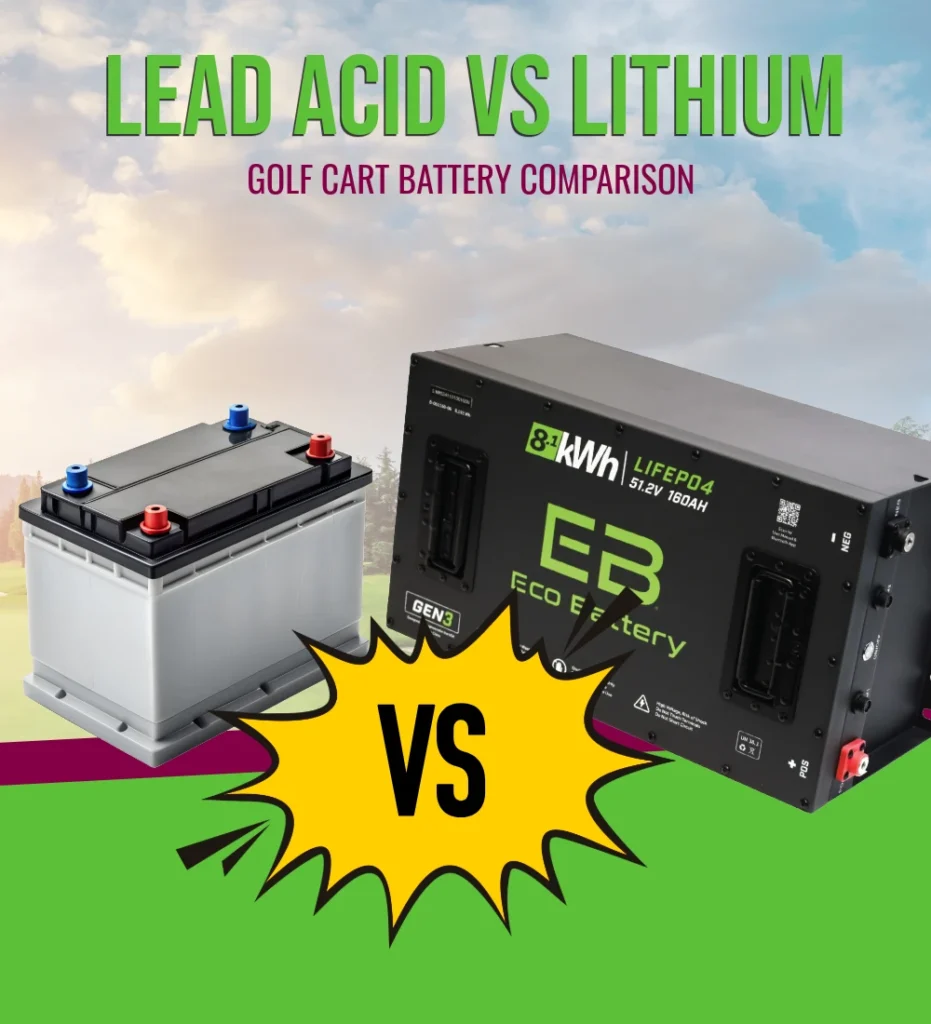
Nothing ruins a sunny afternoon at Lake Sumter Landing like a sluggish golf cart. If you’ve noticed your cart struggling on the hills or requiring constant water refills, then you may have also gone down the rabbit-hole of upgrading to your electric cart to a lithium battery. You’ve likely also encountered the lively “Lead Acid vs Lithium Golf Cart Battery” debate, where many manufacturers and producers are exploring the PROs and CONs of the two battery technologies.
For years, Trojan lead-acid batteries have been the default power source for golf carts – fueling the aftermarket for lithium and sparking the lead acid vs lithium golf cart battery debate. They earned their reputation by offering what was once considered good value and reliable deep-cycle technology. However, with rising manufacturing costs and the arrival of superior alternatives, the increasing price of lead-acid batteries no longer justifies their severe drawbacks.
This post is all about our take on lead-acid limitations, expose misleading marketing, and diving deep into why Lithium Iron Phosphate (LiFePO4) is the superior, long-term choice for every golf cart owner. As sellers and service providers in The Villages – with one of the largest golf cart communities in the country – we’re uniquely qualified to give a practical breakdown of the subject.
Traditional lead-acid batteries, like those from Trojan (or the stock batteries many electric golf carts come with), rely on a chemical reaction between lead plates and sulfuric acid. While they work, this chemistry imposes critical limitations on your golf cart’s performance and maintenance. Lets highlight some of the realities when comparing Lead Acid vs Lithium Golf Cart Battery.
The industry has adapted its marketing to compete with lithium, the “ Lead Acid vs Lithium Golf Cart Battery” is alive and well – even though Lithium technology has begun to clearly illustrate technical dominance. Some manufacturers produce their carts with lead acid batteries knowing that they are an inferior product, and will expire after your warranty window. Don’t be fooled by these tactics:
One of the biggest misconceptions we hear is that the high Amp-Hour (Ah) rating on traditional lead-acid batteries translates to more available power than a lower-rated Lithium Iron Phosphate (LiFePO4) battery. When it comes to lead acid vs lithium golf cart battery, there’s a bot more to it than just the raw numbers.
If you have a 48V system, you might look at a common high-capacity lead-acid pack, like those using six 6V batteries (e.g., Trojan T-105 type), which are typically rated at around 225Ah (20-hour rate), and question how a 105Ah LiFePO4 battery can possibly be an upgrade.
The key is Usable Capacity and Consistent Power.
The most critical factor for performance in the lead acid vs lithium golf cart battery debate, especially for those driving long distances (like busy courses or community cruising), is Voltage Sag.
The usable range of a lead-acid battery is from 100% down to 50%$ As you drive and the charge level drops toward that 50% limit, the battery’s overall voltage level drops significantly.
|
Battery Type |
Rated Capacity (Ah) |
Max. Safe DoD |
Usable Capacity (Ah) |
Power Output Consistency |
|
Lead-Acid (Common) |
≈160 Ah |
50% |
≈80 Ah |
Decreases sharply as capacity is used (Voltage Sag) |
|
Lead-Acid (High Capacity) |
≈225 Ah |
50% |
≈112 Ah |
Decreases sharply as capacity is used (Voltage Sag) |
|
LiFePO4 |
105 Ah |
100% |
105 Ah |
Remains stable throughout 90% of the discharge cycle |
When a quality LiFePO4 battery reports its State of Charge (SOC) as 100% or 0%, it’s not actually at the cell’s physical limits. The integrated Battery Management System (BMS) is programmed to cut off the charging current before the cells are technically “full” and cut off the discharging current before the cells are truly “empty.” Most lithium batteries come with a proprietary BMS designed for that battery – like the ones we reccomened from Bolt Energy and Eco Battery.
Conclusion on Capacity: A 105Ah LiFePO4 battery delivers virtually the same amount of usable energy as even a very high-capacity 225Ah lead-acid pack. More importantly, it delivers that power consistently, without the risk, weight, or the crucial power degradation over distance. These differences add up quickly when comparing a lead acid vs lithium golf cart battery.
Lithium Iron Phosphate (LiFePO4) is the safest, most stable, and most powerful lithium battery chemistry available for electric vehicles. For golf carts, it is an undeniable upgrade. in the lead acid vs lithium golf cart battery race, LiFePO4 Lithium batteries are the clear winner every time.
Feature | Lead-Acid | LiFePO4 | The Winner |
Weight | Extremely Heavy (≈350 lbs for 6 x 8V) | Up to 70% Lighter (≈100 lbs total) | 🏆 LiFePO4 |
Performance | Voltage/speed drops sharply as charge depletes. | Consistent, full power until near-empty. | 🏆 LiFePO4 |
Usable Capacity | ≈50% (must not discharge below 50%) | ≈80% – 100% (safely discharge deeper) | 🏆 LiFePO4 |
Lifespan (Cycles) | 300–1,000 cycles (3-5 years) | 2,000–5,000 cycles (8-10+ years) | 🏆 LiFePO4 |
Maintenance | Regular watering, cleaning, and acid checks. | Zero Maintenance (Install and Forget) | 🏆 LiFePO4 |
Charging Time | 6–8+ hours to fully recharge. | 2–4 hours to fully recharge. | 🏆 LiFePO4 |
Beyond better performance, switching to a LiFePO4 battery is the foundational upgrade that unlocks a world of electrical accessories. Lead-acid batteries suffer from significant voltage drop under heavy load (like driving up a hill with the lights on), which can cause soundbars to cut out, lights to dim, and controllers to overheat.
Clean, stable, high-powered lithium is the key to all the cool stuff:
While the initial purchase price is higher, LiFePO4 is the superior long-term investment due to its longevity and efficiency. The cost of lead-acid replacement includes the battery price plus the labor cost for each subsequent replacement. For lead acid vs lithium golf cart battery comparisons, we factor the cost over an entire lifetime of your golf cart.
Cost Factor | Lead-Acid (Estimated) | LiFePO4 (Estimated) |
Initial Battery Cost (48V Pack) | $1,250 | $2,500 |
Initial Labor Cost to Install | $250 | $500 |
Replacements Over 10 Years | 2 replacements (Years 3 & 6) | 0 replacements |
Total Replacement Battery Cost | $2,500 (2 x $1,250) | $0 |
Total Replacement Labor Cost | $500 (2 x $250) | $0 |
Maintenance Cost (10 Years) | $150 | $0 |
Total Cost of Ownership (TCO) over 10 years | $4,650 | $3,000 |
If you’re tired of slow performance, constant watering, and the potential health hazards of lead, the switch to LiFePO4 is the most impactful upgrade you can make to your golf cart.
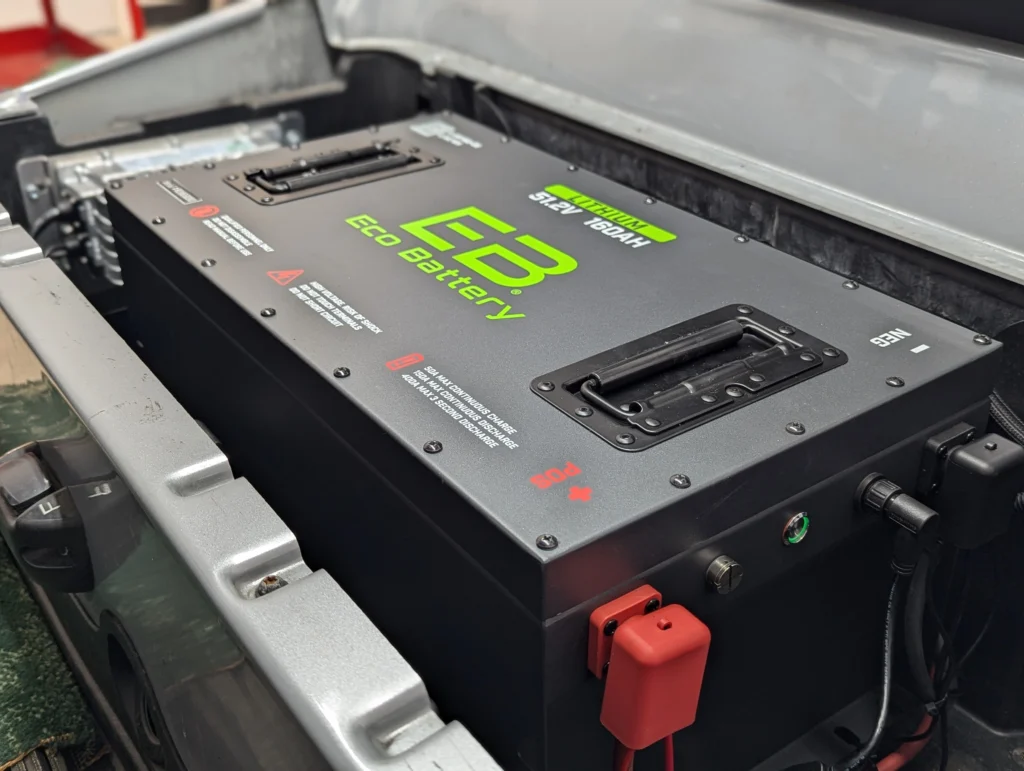

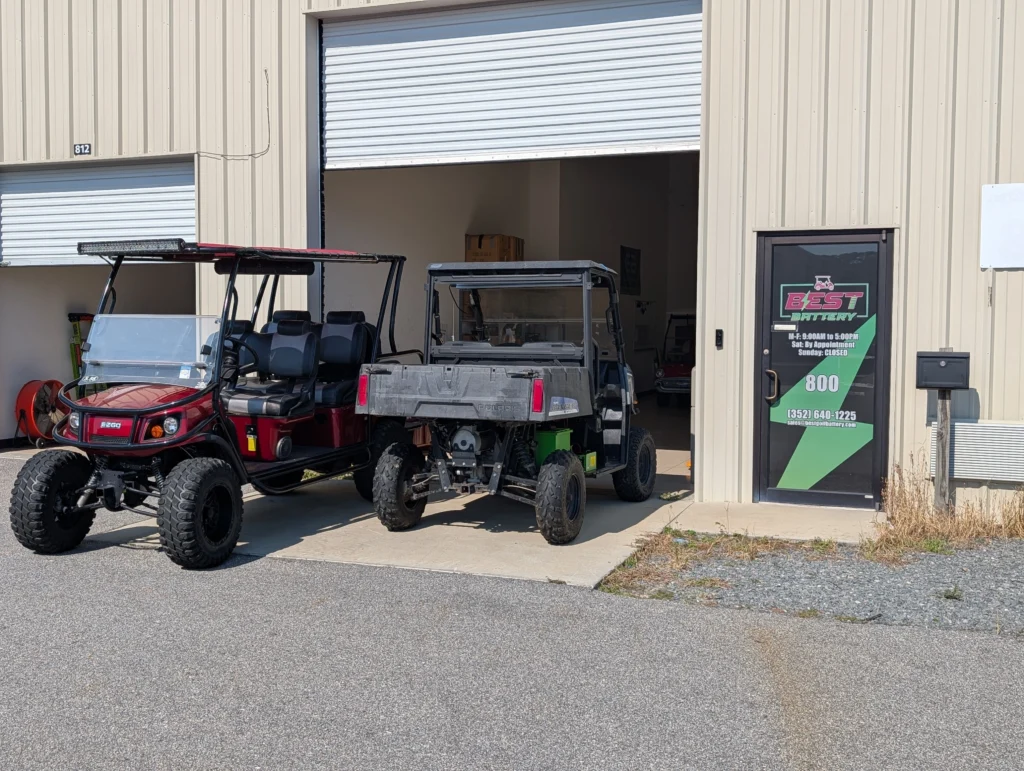
If you’ve been researching lead acid vs lithium golf cart battery, and you’re ready to upgrade, consider getting your battery from BEST Battery, in Wildwood FL. From our shop outside of The Villages, we do everything from installations to battery reviews and guides. It’s our mission to be the #1 source for golf cart battery products and knowledge.
To learn more about the differences and comparisons between lead acid vs lithium golf cart battery, follow us on Facebook, or submit a form here on our site to learn more.
Swing on by and check out our booth (November 29th, 2025), we’ll be showing off the new Eco Batteries, LED lighting set-ups, Golf Cart accessories and more…
